ATS score deletion
One bad score can follow you for months.Let’s erase it.
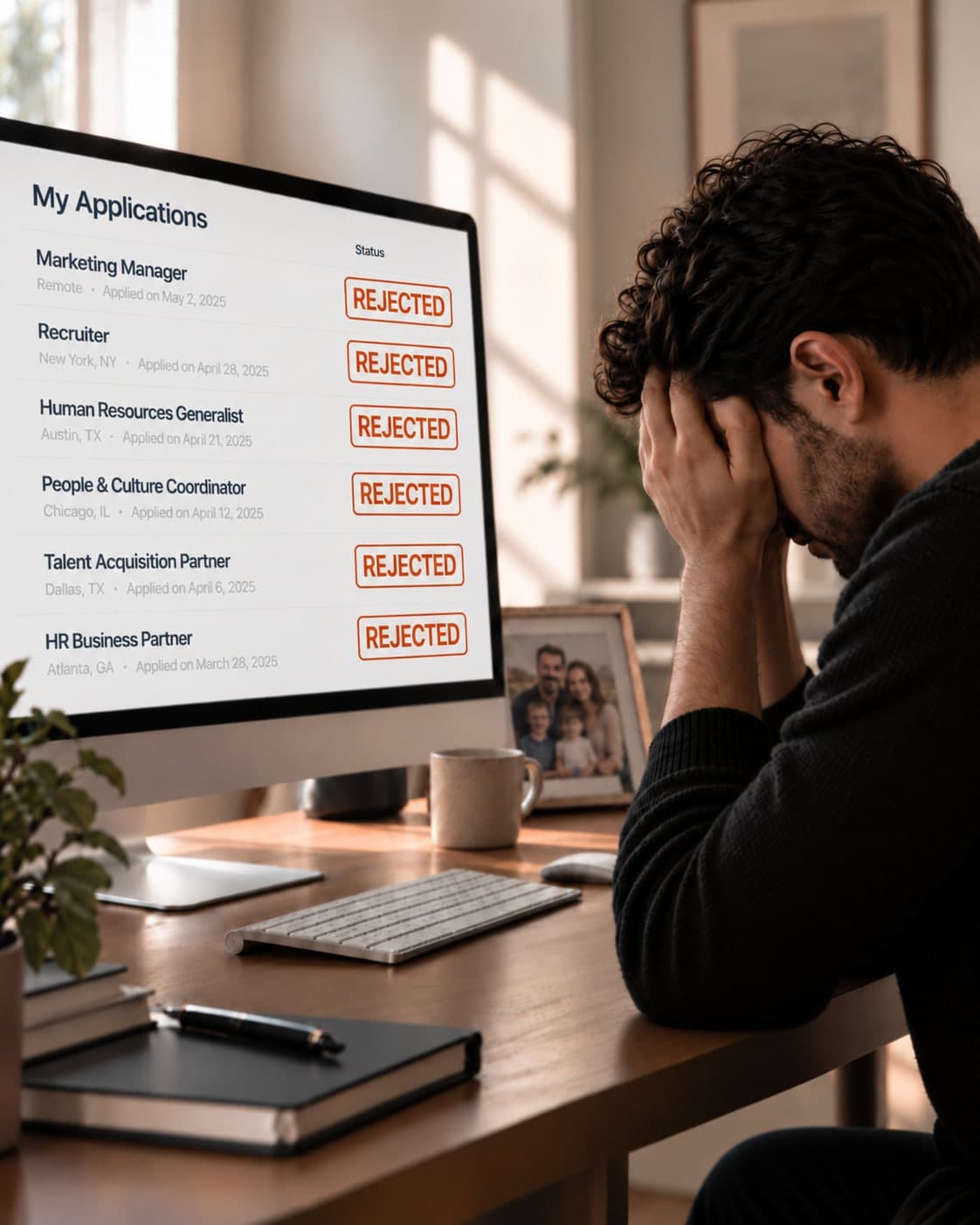
Applied to hundreds of jobs and keep getting rejected, even though you’re qualified? A computer is scoring you before any person sees your resume. ATS Reset writes the request that asks companies to delete that score, and shows you exactly where to send it.
- hiring systems covered
- 32hiring systems covered
- direct privacy contacts
- 28direct privacy contacts
- privacy web-form portals
- 4privacy web-form portals
The problem
It’s not one bad application. It’s one bad score, used everywhere.
The same vendors, over and over
A handful of companies build the software almost every employer uses. Apply somewhere new, and you might still be judged by the exact same program.
Data outlives the application
By law, companies must keep your application for at least one to two years if they work with the federal government. Many keep it even longer.
Decisions before a human reads it
A computer can rank you, score you, and reject you, before any person ever opens your resume.
This isn’t just your experience, it’s documented. Stanford researchers found that when the same company’s software screens you at multiple employers, a rejection in one place often means the same rejection everywhere else. Read the study
The research
This isn’t a guess. It’s been studied.
Stanford Digital Economy Lab
The same software, used everywhere, with real consequences
If it’s ever felt like your resume never got a fair look, no matter where you sent it, Stanford research says you might be exactly right. Researchers tested this directly and ruled out chance as the explanation: when multiple employers buy their hiring software from the same vendor, one rejection isn’t just one rejection. It’s the same decision, repeating itself everywhere that vendor’s software runs.
Read “Algorithmic Monocultures in Hiring”Pending litigation
A lawsuit is asking the same question you are
In a case filed in January 2026, two California job seekers say Eightfold AI collects applicant data and creates a hidden “likelihood of success” score, without telling people, showing them the score, or letting them fix mistakes in it.
Read the complaintThree easy steps. You’re always in control.
Check
See how many hiring systems might have your data. Free. Takes under a minute.
Reset
Pick Reset or Reset Pro. Enter your name, the email you applied with, and your state. We write your request to match your state's laws.
Send
Copy your request. Send it to the contacts we give you. Check each one off, and we'll track what companies say back.
We write the request. You send it. That’s on purpose. The law gives you this right, and a request from your own email is the one companies have to take seriously.
Coverage
32 hiring systems, and counting.
- Ashby
- Rippling
- Eightfold AI
- Harver
- HireVue
- Indeed
- SHL
- Criteria Corp
- Codility
- HackerRank
- Greenhouse
- Workday
- iCIMS
- Lever
- SmartRecruiters
- ZipRecruiter
- Glassdoor
- Monster / CareerBuilder
- Lensa
- Oracle
- Gem
- Workable
- JazzHR / Jobvite
- Paycor
- ADP
- Phenom
- HireEZ
- Wellfound
- Dice
- Handshake
- FlexJobs
Pricing
One-time payment. No subscription.
Checking is free. Fixing it costs less than one order of takeout, and you only pay once.
Free
$0
Start here. See where you stand before spending anything.
- Your estimated exposure across 32 systems
- No card, no commitment
- Takes under a minute
Reset
$29.99
Your personalized request plus 10 selected systems.
- Personalized, state-specific request
- Direct privacy contacts for 10 systems
- Tracking, sent dates and suggested follow-ups
Reset Pro
$49.99
Everything, including web-form destinations and follow-ups.
- All 32 systems in our database
- All 4 privacy web-form destinations
- Copy-all-addresses bulk tool
- Follow-up request generator
What customers say
People who stopped guessing.
“Four hundred applications and near-silence. I sent the requests on a Sunday afternoon. Six companies confirmed deletion within three weeks.”
“I had no idea the same handful of vendors were behind most of the applications I was filling out. Seeing the list laid out was worth the price on its own.”
“The tracking is what made it work. I did five a day instead of trying to do all of them at once and giving up.”
“Straightforward. It wrote the request, told me where to send it, and got out of the way. No upsells after I paid.”
- Does ATS Reset delete my information for me?
- No, and that is deliberate. We write the request and tell you exactly where to send it; you send it from your own email address, which is the version companies are obligated to act on.
- What is an ATS score?
- Shorthand rather than one official number. Different vendors produce match percentages, rankings, screening results and automated recommendations, and call them different things.
- Can hiring platforms keep data from old applications?
- Yes. Federal rules require employers to preserve application records for at least a year, and vendor retention policies frequently run longer than that.
- Can the same technology be used by different companies?
- Yes. A small number of vendors supply screening technology to very large numbers of employers, which is what makes a single assessment matter beyond one job.
- Can I use ATS Reset again later?
- Yes. A cycle runs 90 days. When you start another round of applications you can buy a new Reset, and your previous cycles stay in your account.
Stop reapplying into a system that already said no.
Find out how many of the 32 systems might have your data. Then clear it before you apply again.
- Free to start
- The exposure estimate costs nothing and needs no card.
- One payment, never a subscription
- No recurring charge, nothing to cancel later.
- You stay in control
- We write the request. You send it, from your own address.